In a previous post, we alluded to the specialists deployed against the onset of Hare Barley and Ventenata. This one goes out to Kunekune pigs!
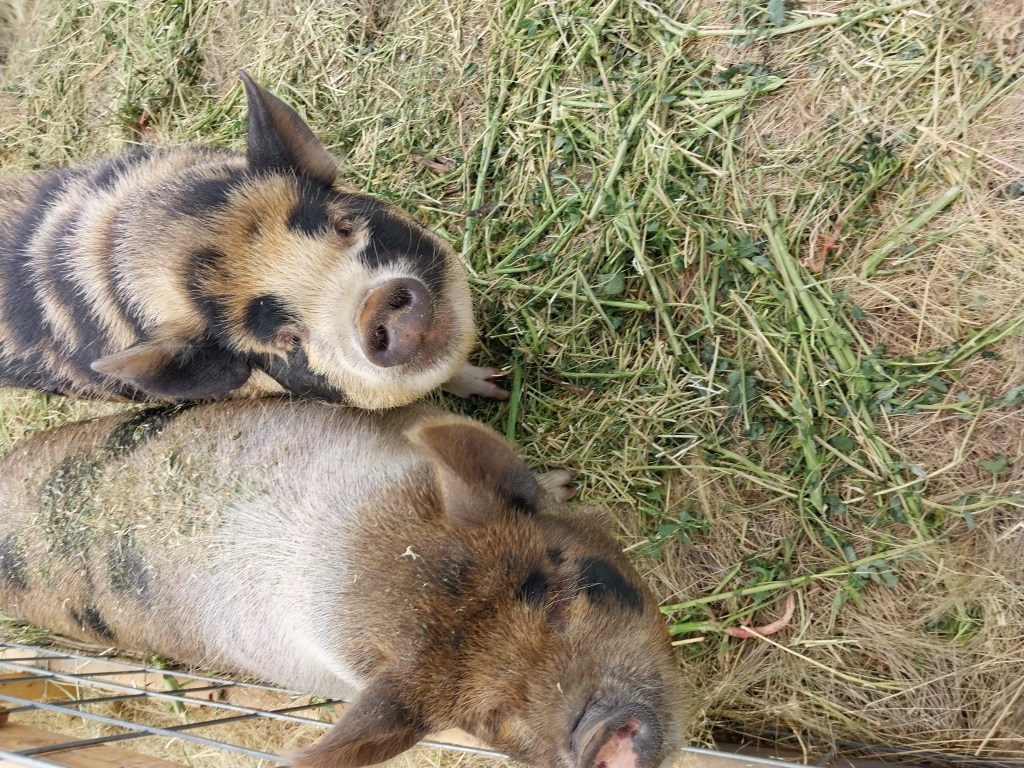
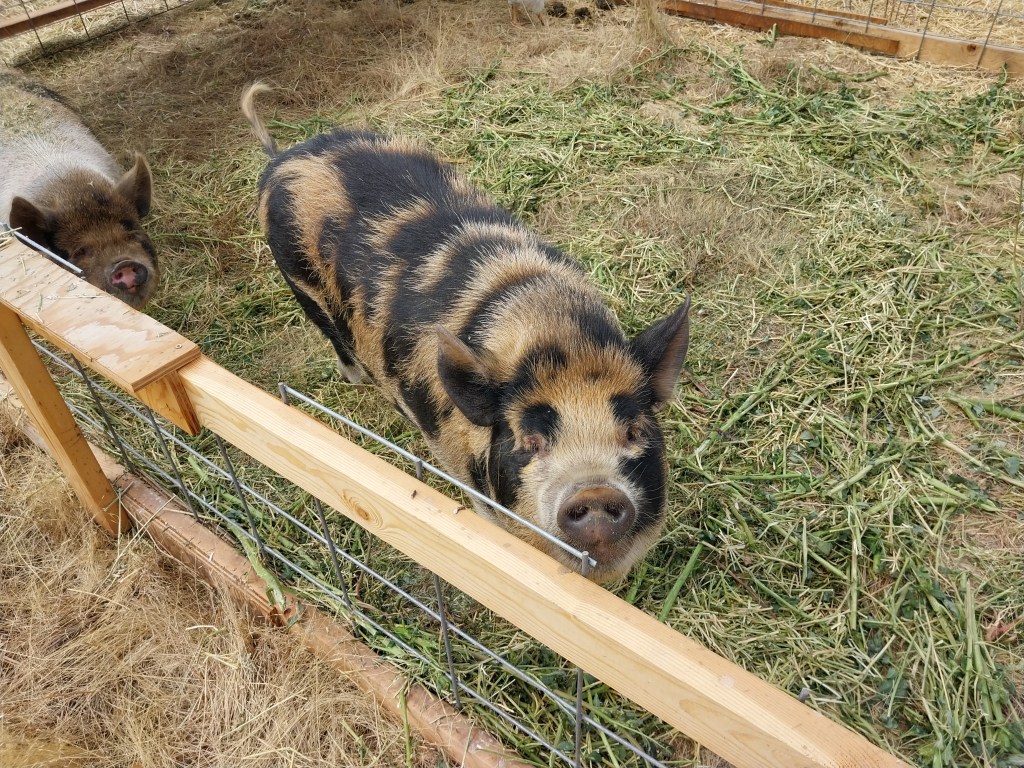
You might be wondering how pigs could alleviate a weed problem. Sure, they eat and trample weeds…but if said weeds have already seeded, there’s already an addition to the seed-bank, just waiting for spring to awaken, out-pace more desirable species (a.k.a. more edible, forages) and be a bigger nuisance than before.
Fair enough. Here’s where some creative problem solving comes into play. ‘Weeds’ aren’t just annoyances. Some are great forages, important members of a thriving, diverse pasture. All weeds are accumulators of some sort, moving some subset of nutrients from one sector of the soil profile to another. Because of that ‘mover and shaker’ status, they are also important indicator species, indicating an imbalance, working to fix it. If one manages to correct the imbalance, one removes the ‘need’ for that particular weed to germinate and do its thing.
Weeds, as Michael Pollan has observed, are plants “particularly well adapted to man-made places. They don’t grow in forests or prairies – in ‘the wild.’ Weeds thrive in gardens, meadows, lawns, vacant lots, railroad sidings, hard by dumpsters and in the cracks of sidewalks. They grow where we live, in other words, and hardly anywhere else.” Weeds indicate a disturbance; usually one in which we were involved. Bare dirt never remains bare for long. Nature is a modest matron, as Justin Rhodes amusedly points out. She needs cover to work her magic. If there’s not enough cover, she is astonishingly adept at retrieving some, from seed-banks unsought: weeds!
In some of our paddocks, perhaps the Ventenata is signaling not just our disturbance but a previous disturbance…previously pastured horses, heavy compaction of heavy clay and dearth of beneficial species. Horses are legendarily rough on ground…unless your blessed with sub-irrigated bluegrass and white clover (and a lot of it!). At any rate, soil nutrient cycling in said paddock is at a critically low ebb, prompting the rapid growth of weeds, nature’s effort to jump-start beneficial processes.
Adding more nutrients via manure and grazing impact with sheep and chickens hasn’t proven enough to address our problem. Sections of our paddocks have improved, but the overall trajectory has been less than ideal. Now we’re pulling out all the stops.
In one section, chickens, intensively grazing, laying manure, sizing and spreading residue. As mentioned above, cover is crucial to soil building. “Managing for soil health,” notes Jon Stika, “is mostly a matter of maintaining suitable habitat for the myriad of creatures that comprise the soil food web….Why is soil cover so important for improving soil health? Soil cover conserves moisture, intercepts raindrop impacts, suppresses weed growth, and provides habitat for members of the soil food web who spend at least some of their time above, not in, the soil.” Chicken activity isn’t enough to leave the kind of necromass (i.e. dead stuff) we’re after. Following on the chickens, we are strip feeding hay to our rams. Once enough of a residue blanket is down, we move them on. In another weedy section, the pigs.

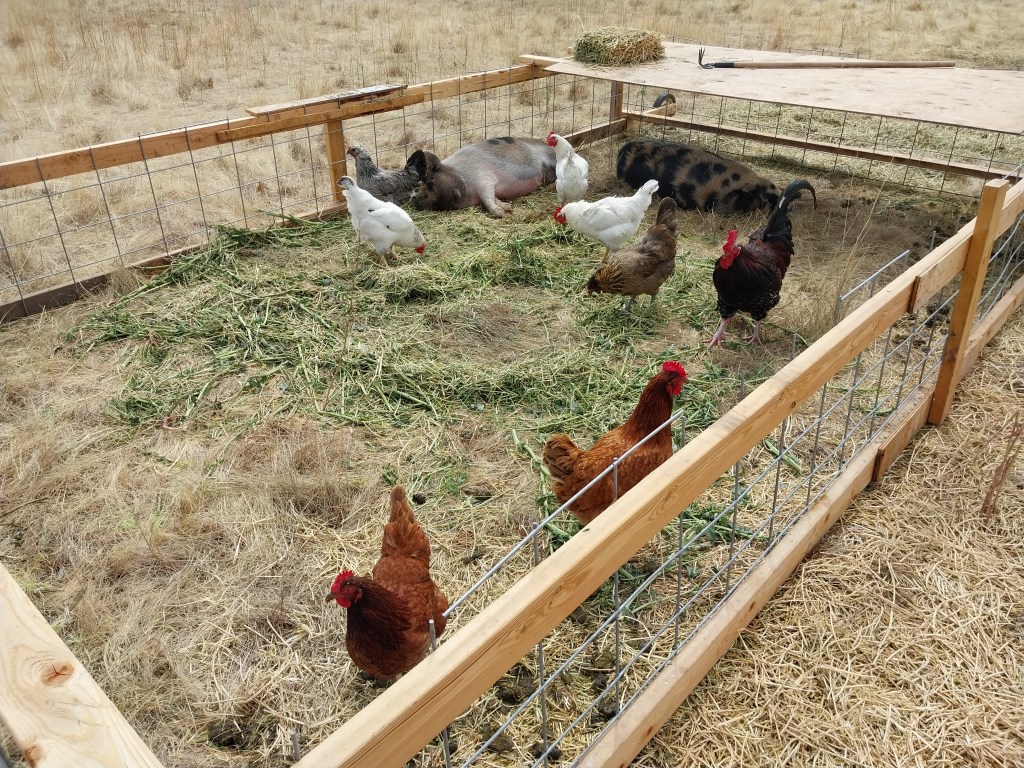
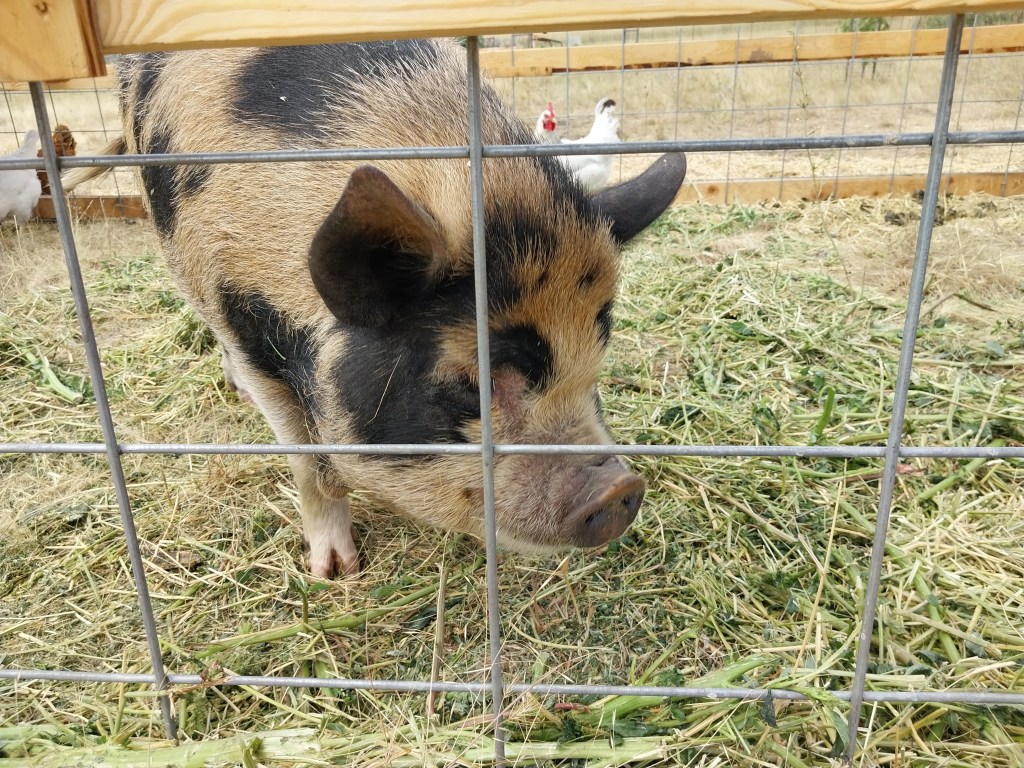
Here’s where sus domesticus really shine: they combine eating/chomping/stomping with mild disturbance through light rooting and wallowing. As they are moved daily, their manure is spread and intermixed with residue from their feed. A few of our chickens have decided to hang out with their porcine friends, lending their talents to the mixing and the spreading. Once all is said and done, we hope to have a fine layer of organic material for nature to further incorporate and build upon…without having to summon those pesky weeds.
Two final notes. Ventenata is said to signal a phosphorus deficiency. Pig manure is rich in phosphorus. Additionally, spots where the pigs wallow will be back-filled with inoculated soil and seeded with desirable forages: hotspots of dynamism. Let’s hope they spread.
Thanks, pigs!
 Castricum Ranch