Another spring, another seeding! The last few weeks have brought sub-zero temps, nearly two feet of snow, followed by gale force chinook winds, temps in the mid-forties, rain…and tens of hundreds of gallons of melt-off. Then, the last couple days brought glorious sun and sixty degree temps. So. Much. Water. Though, as our friends at Reditus Natural Farming remind us, we should be grateful for the clear ground. They, at a higher elevation with its own chilly, butte-induced weather, still have some inches of snow-cover. A bit daunting from the horticultural angle, agreed?
Inside our shop, however, we’re making the best of it. Time to sow early Asian greens, spinach and dwarf kale!
Our planting media are in the up-cylced molasses totes allowing for ready access, custom mixes, and a kid-sized seeding bench.
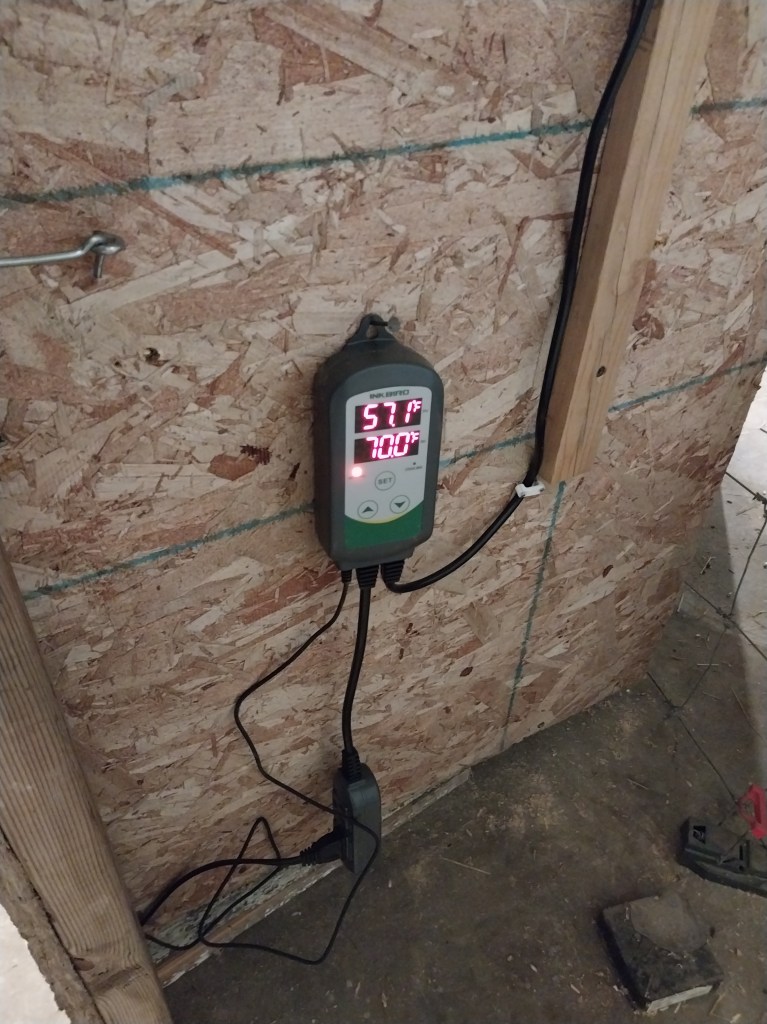
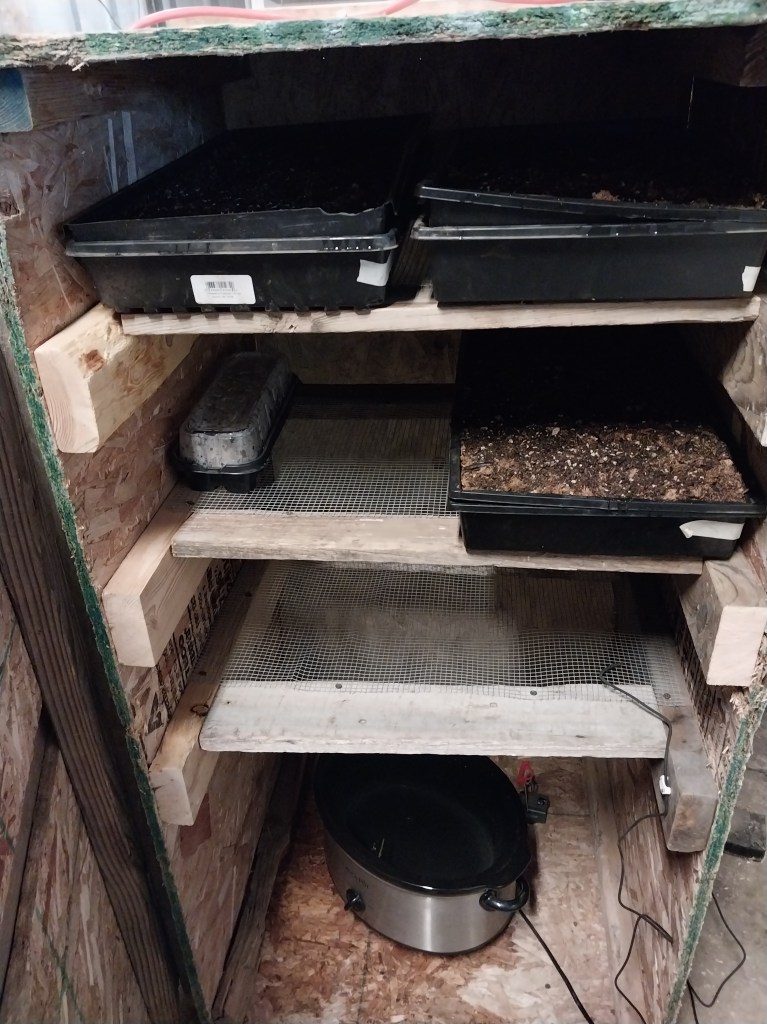
Once seeded, the trays head to a newly fashioned germination chamber. Heat and humidity source? Slow cooker controlled by Inkbird thermostate: energy efficient and relatively compact. We hope the mellow start will translate to increased germination rates, reduced seedling stress and greater plant vitality. Here’s to hoping!
It’s been a long time since our last post. You would think, it having been winter and all, that there would be more time for posting…or at least that updating the farmstead blog would be a higher priority. Neither turned-out to be the case.
I saw a bumper-sticker the other day. Generally obnoxious substitutes for meaningful expression, this particular sticker was equal parts amusing and thought-provoking: “No airbags: We die like real men.” For once, a sentiment well-put.
So here’s the ‘no-airbags’ honest truth. This effort is going to be different than other efforts one finds around the inter-webs. We do not receive commission or gratuity for our linked content: All links are provided for personal enrichment…Take ‘em or leave ‘em. We do not make a living as ‘influencers’. We don’t ‘advertise’ for remuneration: Any mention of friends and associates are meant by way of gratitude and to share their good services with those of you in the locality. Finally, we won’t be posting relentlessly, bombarding you with content: Lord knows, there is enough of it (good, bad…mostly bad…and indifferent) out there. If one’s family is to actually be “the first school of social virtues”(JPII), one has to actually live family life. Sometimes that means ‘sharing’ less with the community writ-large.
If all the above means that our farmstead effort is doomed to an early demise, so be it: Let it be honest and unencumbered.
The garden has been coming along nicely this year. Granted, the growing season has been odd this year, with things off to a slow start, followed by blistering heat, followed by unseasonably cool wet. But, all griping aside, things are much improved from previous years.
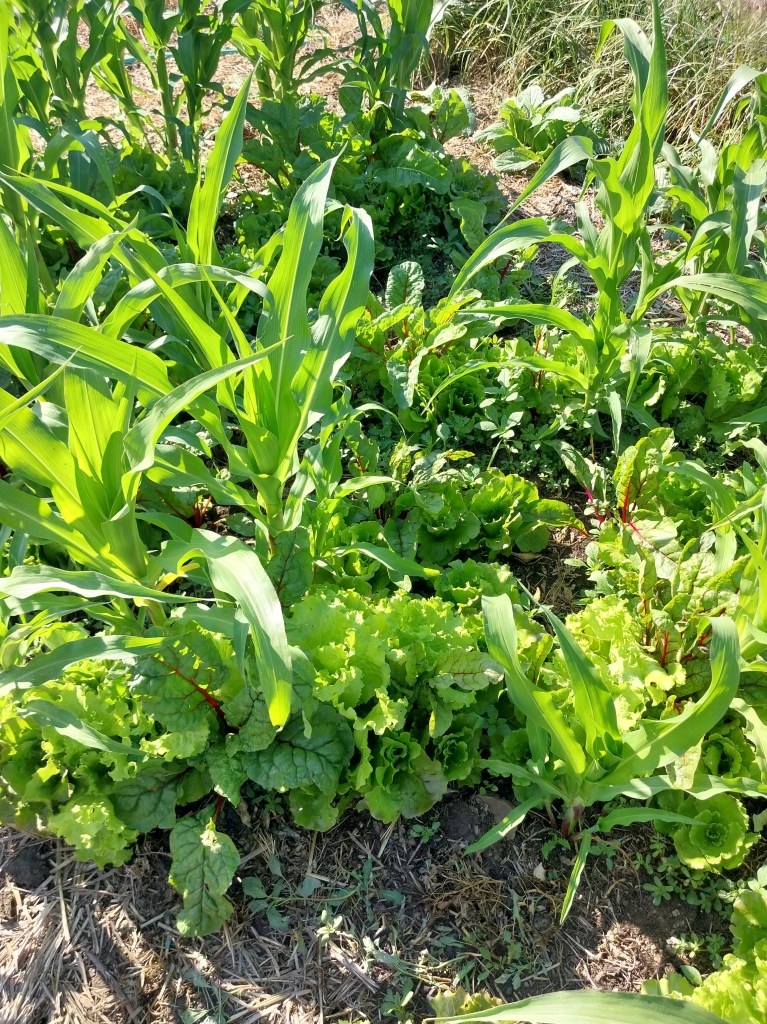
A lettuce mesclun amongst Early Sunglow corn.
We actually have a great turnout of lettuce this year. Our kale has provided us with numerous harvests…we hope it has a few more in it. Eggplants…well…much smaller than expected, and it willl be a race for them to set and ripen fruit before the first frost…but they’re hard at it.
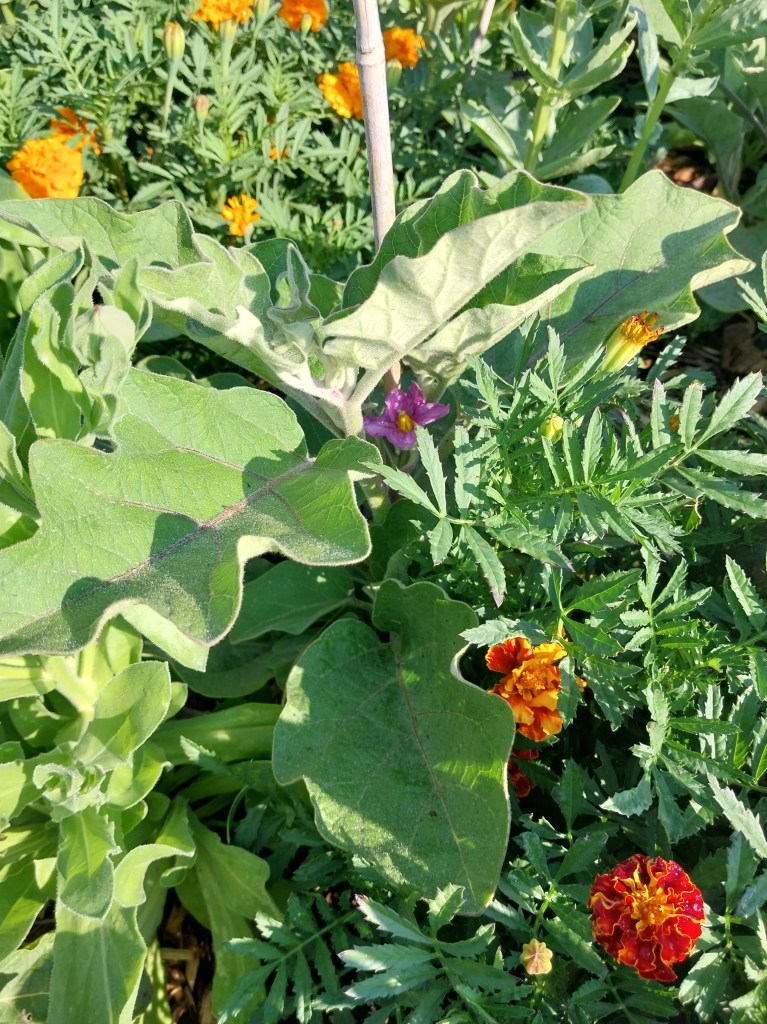
The protective guild seems to be paying off, as the aubergines, notoriously vulnerable to pests, have, thus far, been largely untouched.
Inspired both by Helen Atthowe and the rich tradition of British gardening as personified by master practitioner Monty Don we’ve made it a point to add more blossom and bloom throughout, as a lure to beneficial insects, a defense against pests and for the simple beauty of the thing.
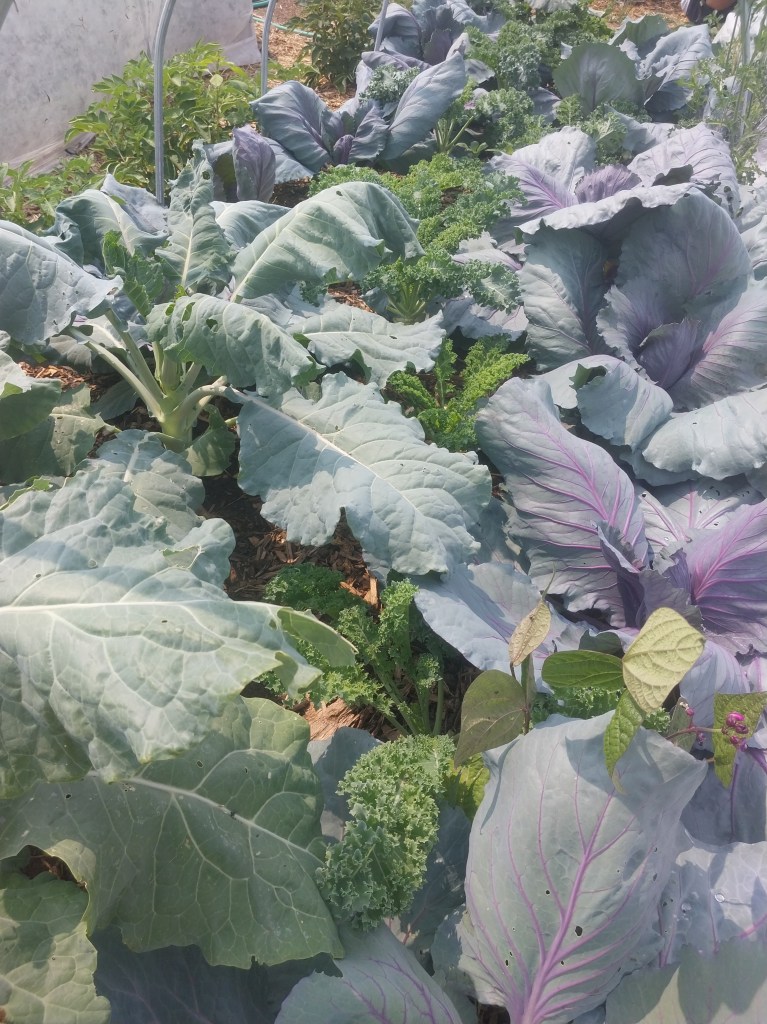
Our coles looked good…’till flea beetles breached row cover defenses.
The coles are still hanging tough, particularly the red cabbage….brussel sprouts are taking a beating. However, we still hope to eat some of it…particularly with the flea beetle season subsiding, and various ‘tea’ applications in the offing. We made a point of treating both beds with a foliar application of SAR (Systemic Acquired Resistance) inducing tea made from willow growth tips and a skosh of neem oil….The cabbages didn’t come out looking great. Did the oil cut the waxy lipid based defenses of the leaves, opening them to attack? Did the neem discolor? Was the stress, induced by salicylic acid, too much? Or, in the long run, will things pan out just fine? It remains to be seen.
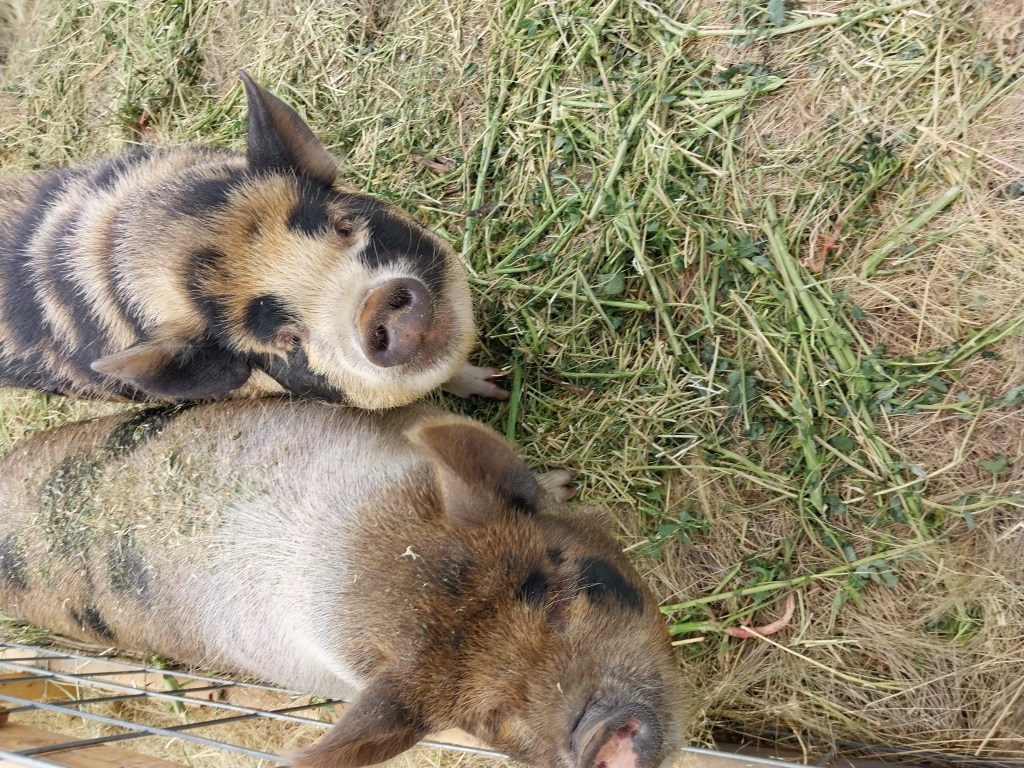
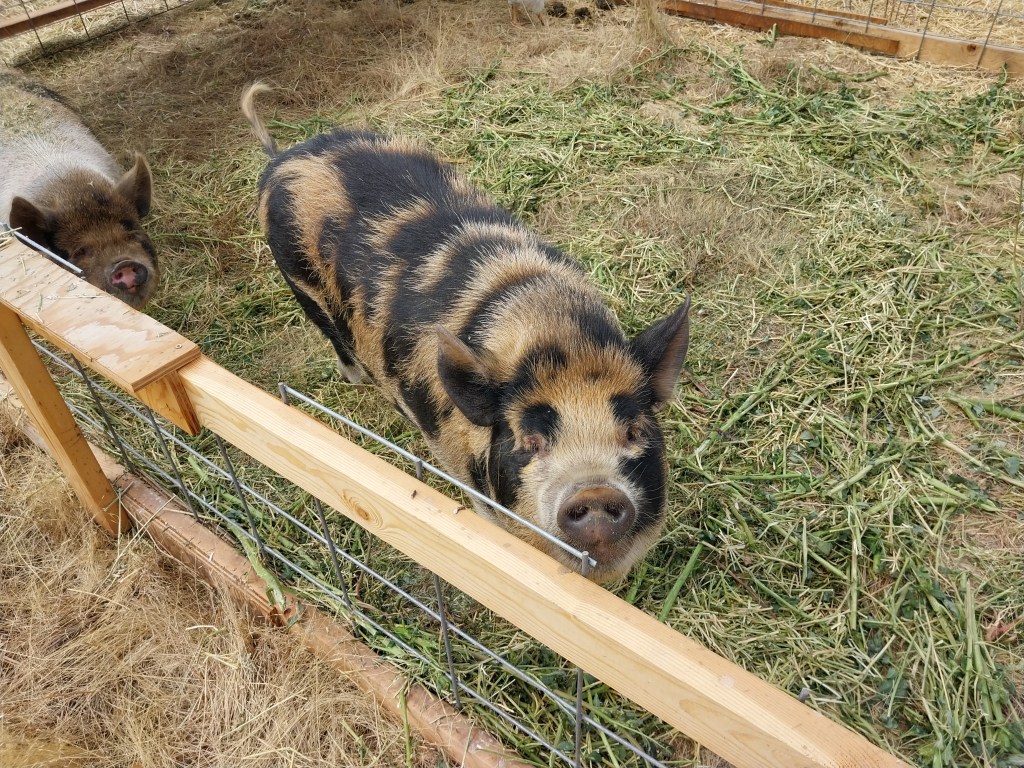
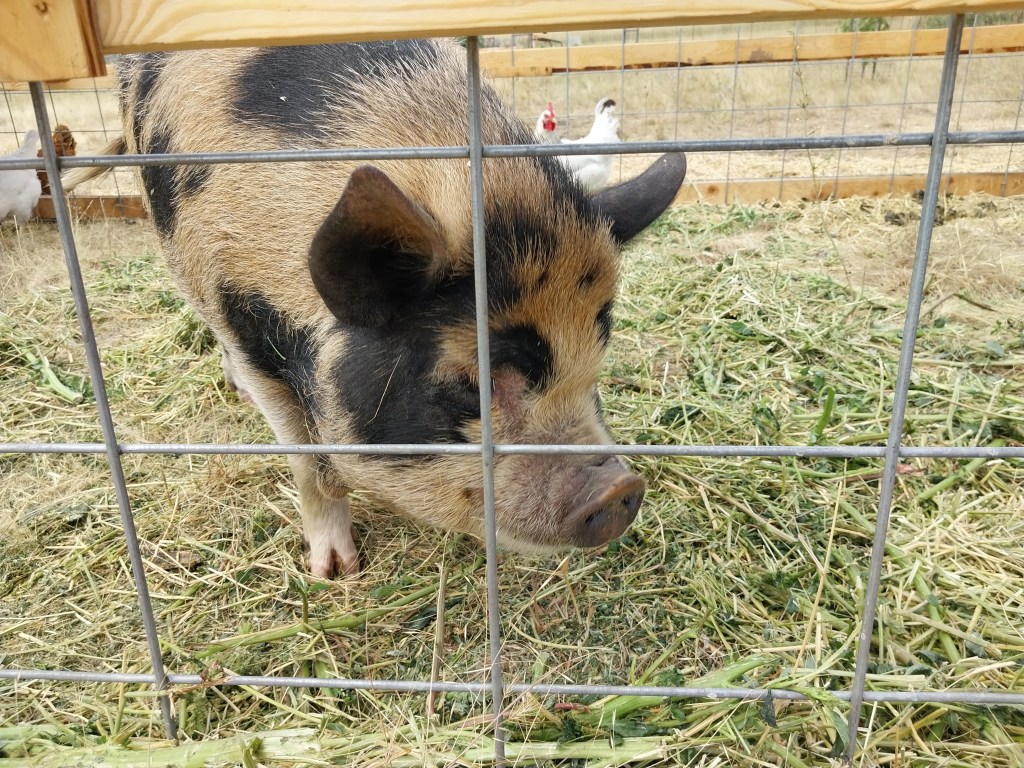
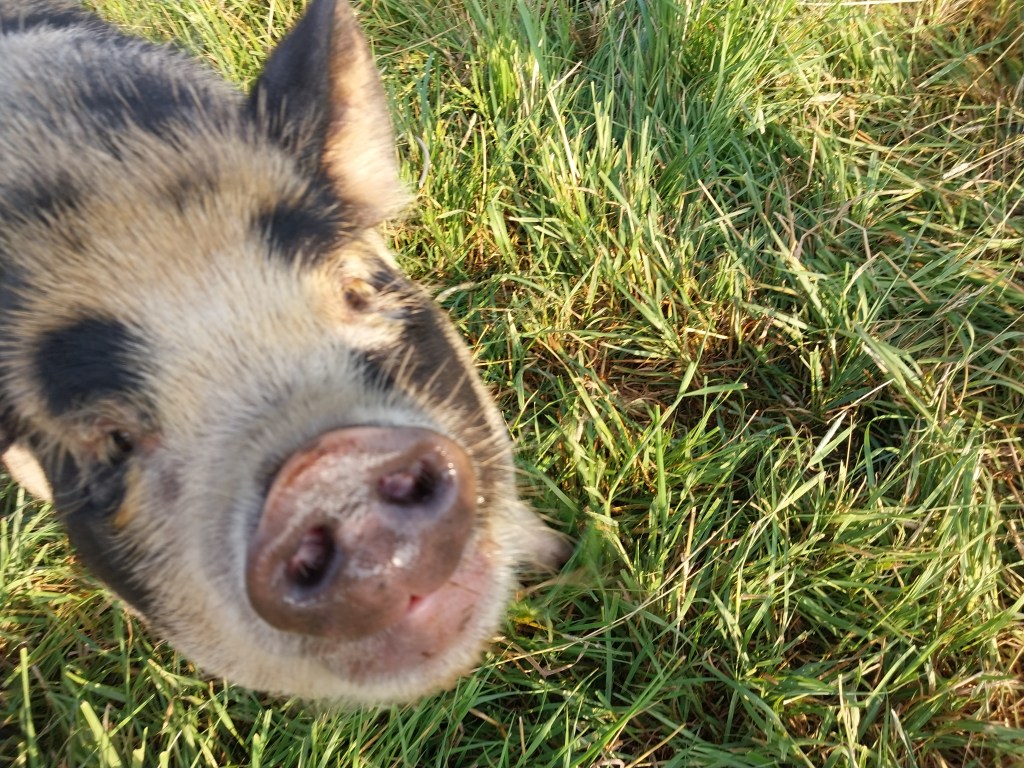
Our pigs’ time with us is drawing to a close. Both are just over a year old. They’ve had a good life…as good as their stewards could manage. Perna and Offa, our two Kunekune sows, will be culled soon. It will be a bitter-sweet moment: the bitter goodbye offset by the sweet…succulent, premium pork in the freezer.
Pigs are intelligent and personable…veritable personalities. The ranch always feels a bit empty without their equable temperments, occasional loud squealings at meal time, their simple absorption in the joy of eating. Varra, our livestock guardian dog, certainly misses the curiosities they provide. Perhaps our fowl also miss them…They seem to look a bit bemused without a pig-shelter to hang in, pig-food to scratch in/steal. Maybe they feel a little less secure. Pigs are generally fearless creatures, nonplussed by our local predatory coyotes, skunks, raptors, owls, etc. Apparently, they hardly fear the elements. The other day the ranch was hit by a powerful thunderstorm. Amidst the lightning, powerful thunderclaps, vicious wind, and blinding rain, only two animals could be seen. Everyone had sought shelter…everyone that is except Perna and Offa. There they stood, chomping down their dinner, unfazed by the worst that the elements could muster, tails wagging unconcernedly. Such a big, solid presence surely lends security to plucky yet vulnerable fowl. Heck, it even reassures their caretakers!
We rely on the good, humane services of Cameron, our local mobile-slaughter, and our hometown butchers, Western Meats. The gentlemen at Western Meats are meticulous practitioners of their craft. Everything from the time they take to discuss cut preferences with their customers, the actual butchery, the requisite aging, curing and smoking, their unique specialty sausages and brats….all is approached with care and dedicated flair. They’re great. When their artisan meat-craft completes our regenerative husbandry, the results are tasty and rewarding indeed!
We’ve found Kunekunes to be a great fit for our ranch. A smaller frame (200-300 lbs max), friendly disposition, pasture friendly minimalist rooting make them the perfect ‘in’ to raising pigs. We’ve been getting ours from Furry Tale Farm. Among other things, they raise Kunekune pigs, alpacas, and Nigerian milk goats. If you’re in our region and are looking to raise your own pigs, fill your freezers with some home-grown pork, give the folks at Furry Tale a call or text. The experience of tending pigs is a joy, the rewards delicious!
In a previous post, we alluded to the specialists deployed against the onset of Hare Barley and Ventenata. This one goes out to Kunekune pigs!
You might be wondering how pigs could alleviate a weed problem. Sure, they eat and trample weeds…but if said weeds have already seeded, there’s already an addition to the seed-bank, just waiting for spring to awaken, out-pace more desirable species (a.k.a. more edible, forages) and be a bigger nuisance than before.
Fair enough. Here’s where some creative problem solving comes into play. ‘Weeds’ aren’t just annoyances. Some are great forages, important members of a thriving, diverse pasture. All weeds are accumulators of some sort, moving some subset of nutrients from one sector of the soil profile to another. Because of that ‘mover and shaker’ status, they are also important indicator species, indicating an imbalance, working to fix it. If one manages to correct the imbalance, one removes the ‘need’ for that particular weed to germinate and do its thing.
Weeds, as Michael Pollan has observed, are plants “particularly well adapted to man-made places. They don’t grow in forests or prairies – in ‘the wild.’ Weeds thrive in gardens, meadows, lawns, vacant lots, railroad sidings, hard by dumpsters and in the cracks of sidewalks. They grow where we live, in other words, and hardly anywhere else.” Weeds indicate a disturbance; usually one in which we were involved. Bare dirt never remains bare for long. Nature is a modest matron, as Justin Rhodes amusedly points out. She needs cover to work her magic. If there’s not enough cover, she is astonishingly adept at retrieving some, from seed-banks unsought: weeds!
In some of our paddocks, perhaps the Ventenata is signaling not just our disturbance but a previous disturbance…previously pastured horses, heavy compaction of heavy clay and dearth of beneficial species. Horses are legendarily rough on ground…unless your blessed with sub-irrigated bluegrass and white clover (and a lot of it!). At any rate, soil nutrient cycling in said paddock is at a critically low ebb, prompting the rapid growth of weeds, nature’s effort to jump-start beneficial processes.
Adding more nutrients via manure and grazing impact with sheep and chickens hasn’t proven enough to address our problem. Sections of our paddocks have improved, but the overall trajectory has been less than ideal. Now we’re pulling out all the stops.
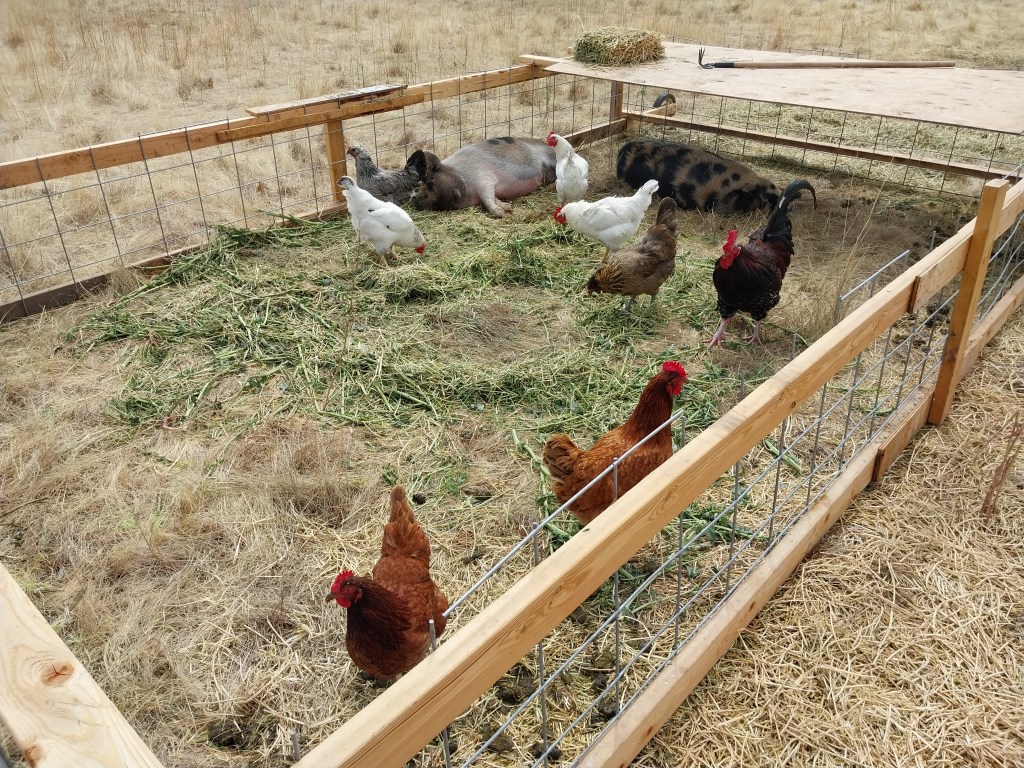
In one section, chickens, intensively grazing, laying manure, sizing and spreading residue. As mentioned above, cover is crucial to soil building. “Managing for soil health,” notes Jon Stika, “is mostly a matter of maintaining suitable habitat for the myriad of creatures that comprise the soil food web….Why is soil cover so important for improving soil health? Soil cover conserves moisture, intercepts raindrop impacts, suppresses weed growth, and provides habitat for members of the soil food web who spend at least some of their time above, not in, the soil.” Chicken activity isn’t enough to leave the kind of necromass (i.e. dead stuff) we’re after. Following on the chickens, we are strip feeding hay to our rams. Once enough of a residue blanket is down, we move them on. In another weedy section, the pigs.
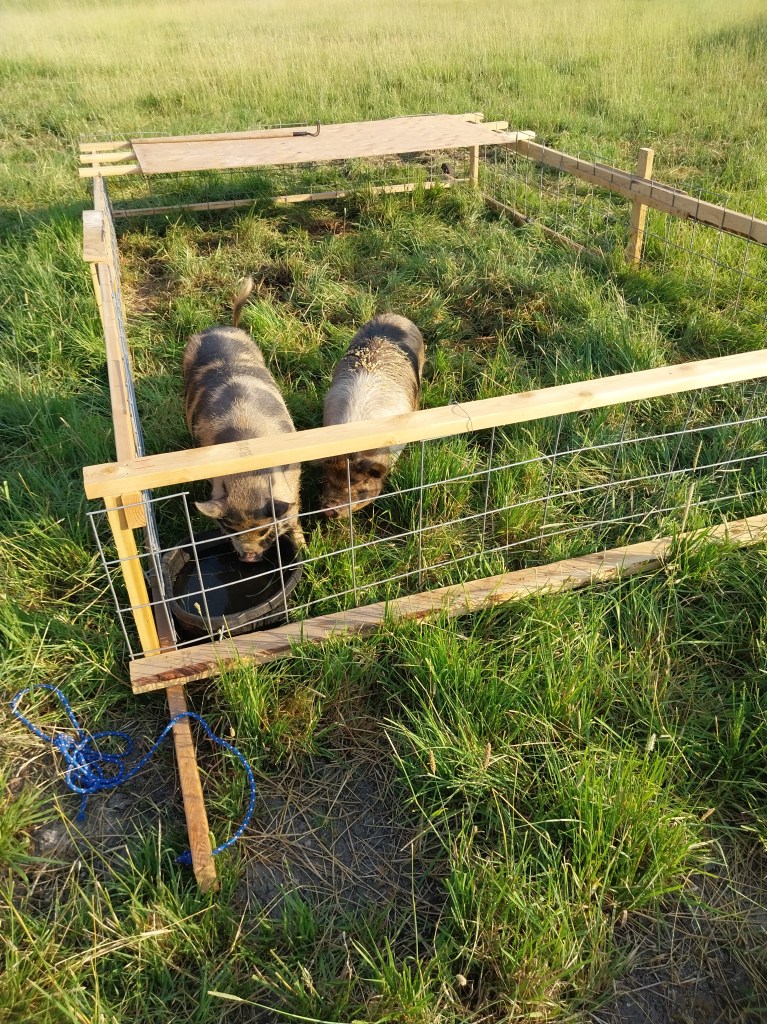
Here’s where sus domesticus really shine: they combine eating/chomping/stomping with mild disturbance through light rooting and wallowing. As they are moved daily, their manure is spread and intermixed with residue from their feed. A few of our chickens have decided to hang out with their porcine friends, lending their talents to the mixing and the spreading. Once all is said and done, we hope to have a fine layer of organic material for nature to further incorporate and build upon…without having to summon those pesky weeds.
Two final notes. Ventenata is said to signal a phosphorus deficiency. Pig manure is rich in phosphorus. Additionally, spots where the pigs wallow will be back-filled with inoculated soil and seeded with desirable forages: hotspots of dynamism. Let’s hope they spread.
An understated benefit of intensively managed regenerative grazing: every few days the stockman gets to experience ‘turnout’. Of course, the most epic ‘turnout’ is in the spring. The pastures are not quite fully awake…not quite…almost…READY! The animals have been restless in winter quarters, tired of dry hay. They’ve been pushing fences, stretching and reaching for that first nibble of fresh grass. Finally, they’re turned out on the first paddock, jaws a-munchin’, tails a-waggin’. Their excitement and contentment (both indeed) are palpable. Its a joy to soak in the sights and sounds…once the hustle and bustle of fence, water, and shelter prep subside.
Now, picture experiencing that joy not once, not twice, but every couple days. The stockman monitors forage height, ground cover, diminishing biomass…Now! The flock or herd must move on. Turnout again! Bliss. The previously grazed paddock will be left to regenerate, cycling another flush of vegetative growth. The herd moves on to a parasite free, choice buffet. The grass is mown, the animals prosper. Repeat.
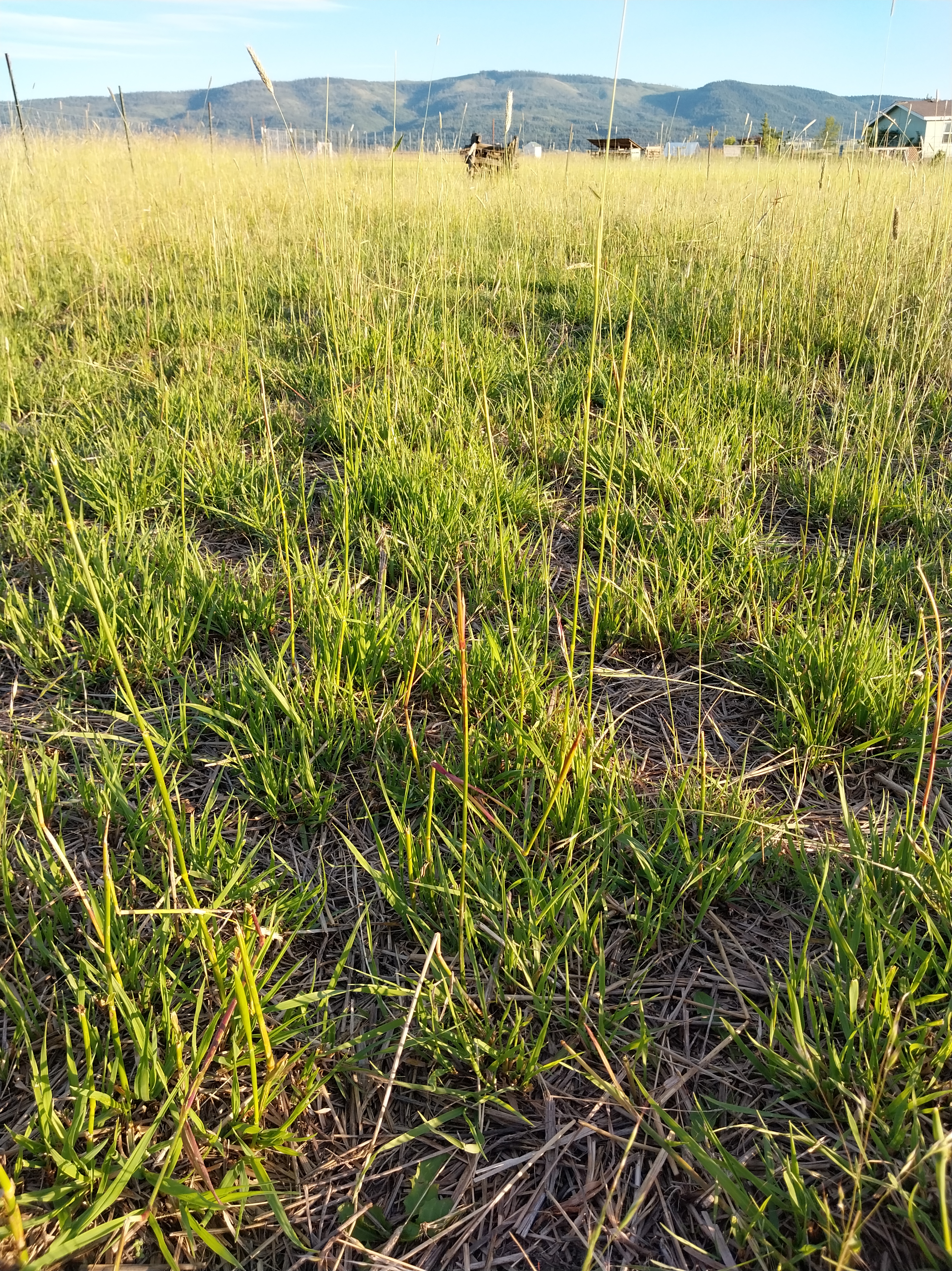
While we have a decent handle on managing pastures in rapid vegetative growth stage (a.k.a. spring and early summer), we are still working on striking the right balance for summer dormancy. There are a number of challenges we face. Our pastures are heavy in cool season growers, light on warm season. It being the inland Pacific North-West, the good Lord’s spigot turns off sooner or later in June (no meaningful rain ‘till September. Our pastures are heavy clay: when wet, they’re really wet; when dry, they’re really dry. The previous owner’s pasture management left something to be desired: there’s a lot of nutrient cycling and weed pressure we need to surmount before things significantly improve. All that is to say, the question of when and how to put our paddocks ‘to-bed’ on the summer is a bit fraught.
Still figuring it out. Here’s a look at some of the pastures during ‘final’ turnout…
after ‘final’ grazing…
After the ‘final’ graze, we usually trim the pasture down, sizing and laying down the remaining residue in an effort to armor the
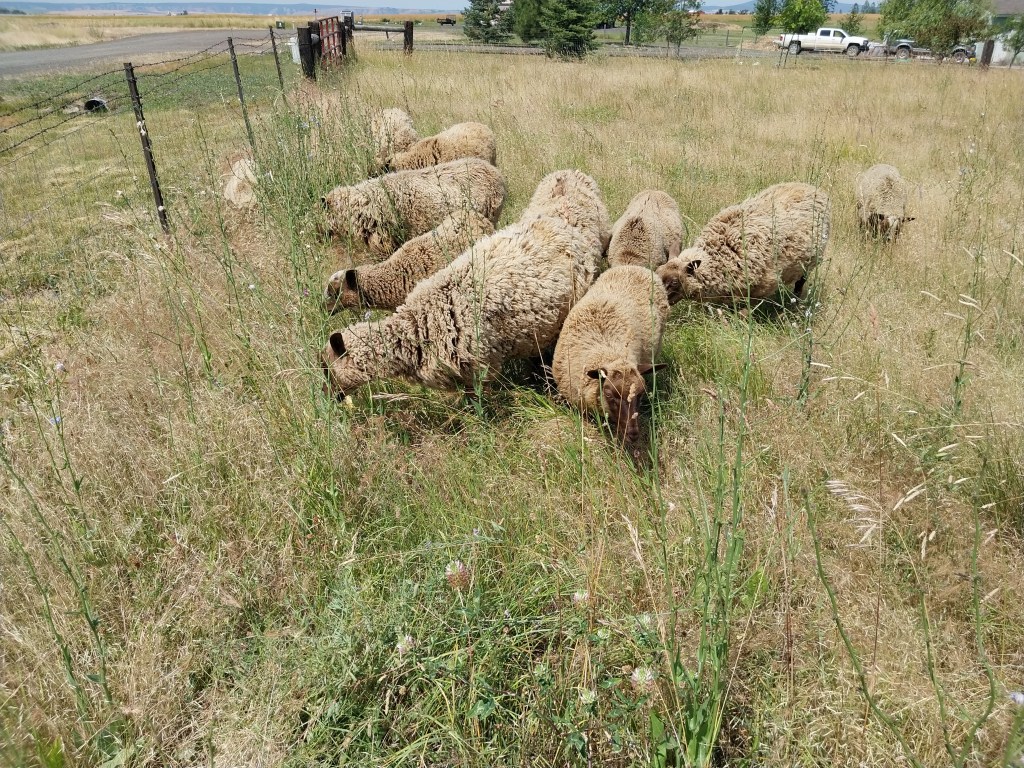
Here’s to hoping that less desirable weeds maintain a minimal presence ‘till more desirable species give us their autumn flush. We’ve tried intensive poultry grazing to cycle out our foxtail hare barley and ventenata…with minimal results. We’re trying again this year with the addition of a secret weapon:
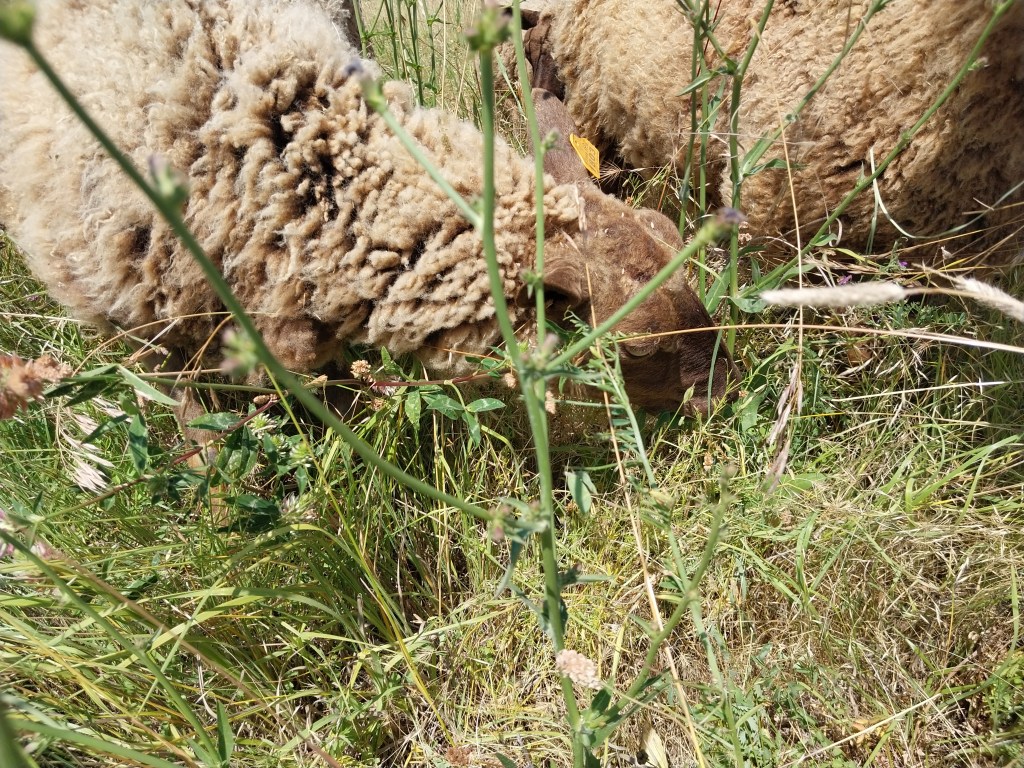
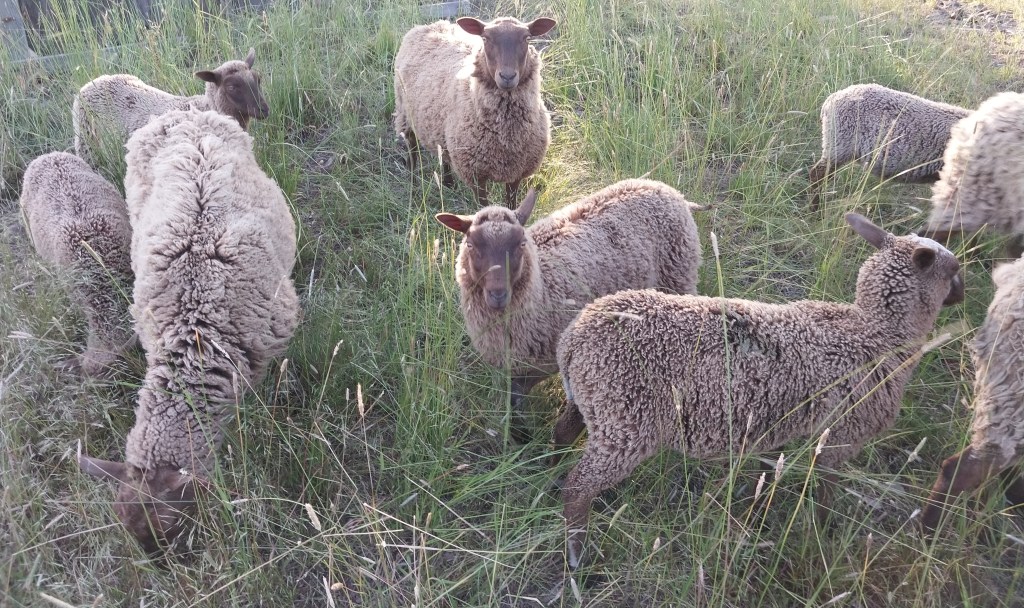
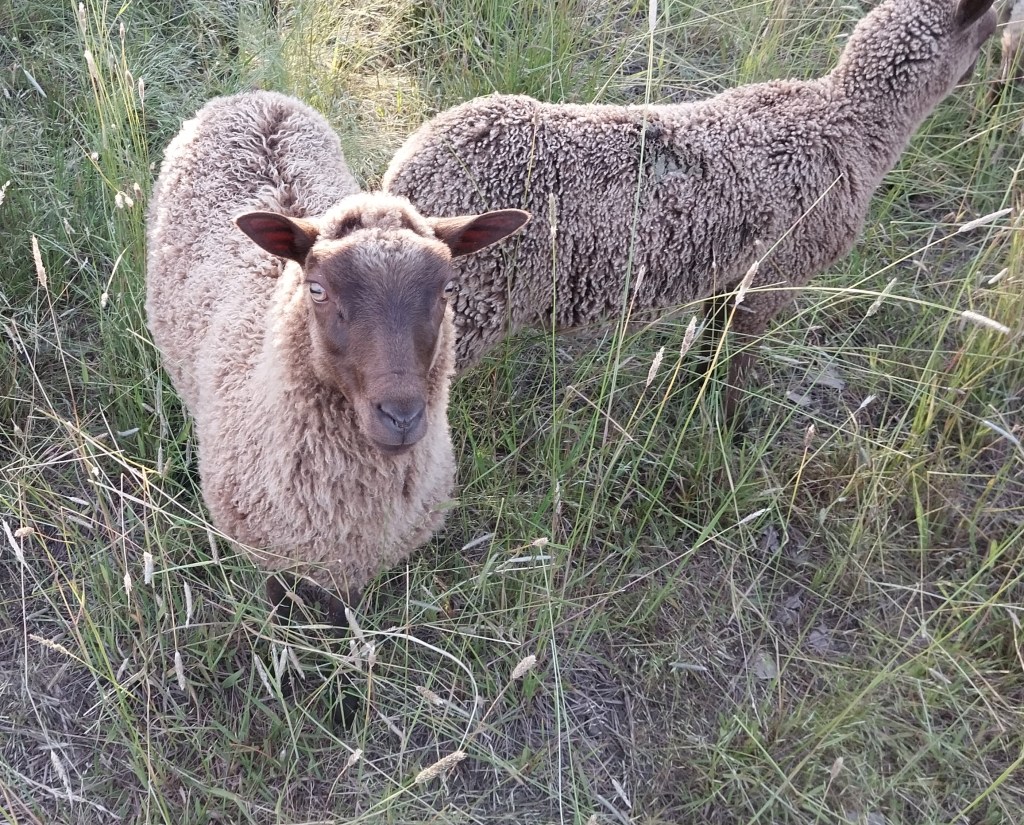
Three ewe lambs, two adult ewes, and three ram lambs. Self weaned…ready to go! Two of the rams will likely be becoming wethers soon, so don’t delay in contacting us should you be interested in purchasing young breeding rams.
Our registered Finns are family friendly, small, low-maintenance and homestead ready. Regeneratively raised, grazed and finished on mixed species pasture, they are a great fit for everything from lawn mowing/fertilizing to ranch maintenance.
We’re looking forward to hearing from you! Feel free to call or text: (208) 702-2756. Email us: homestead@castricumranch.com.
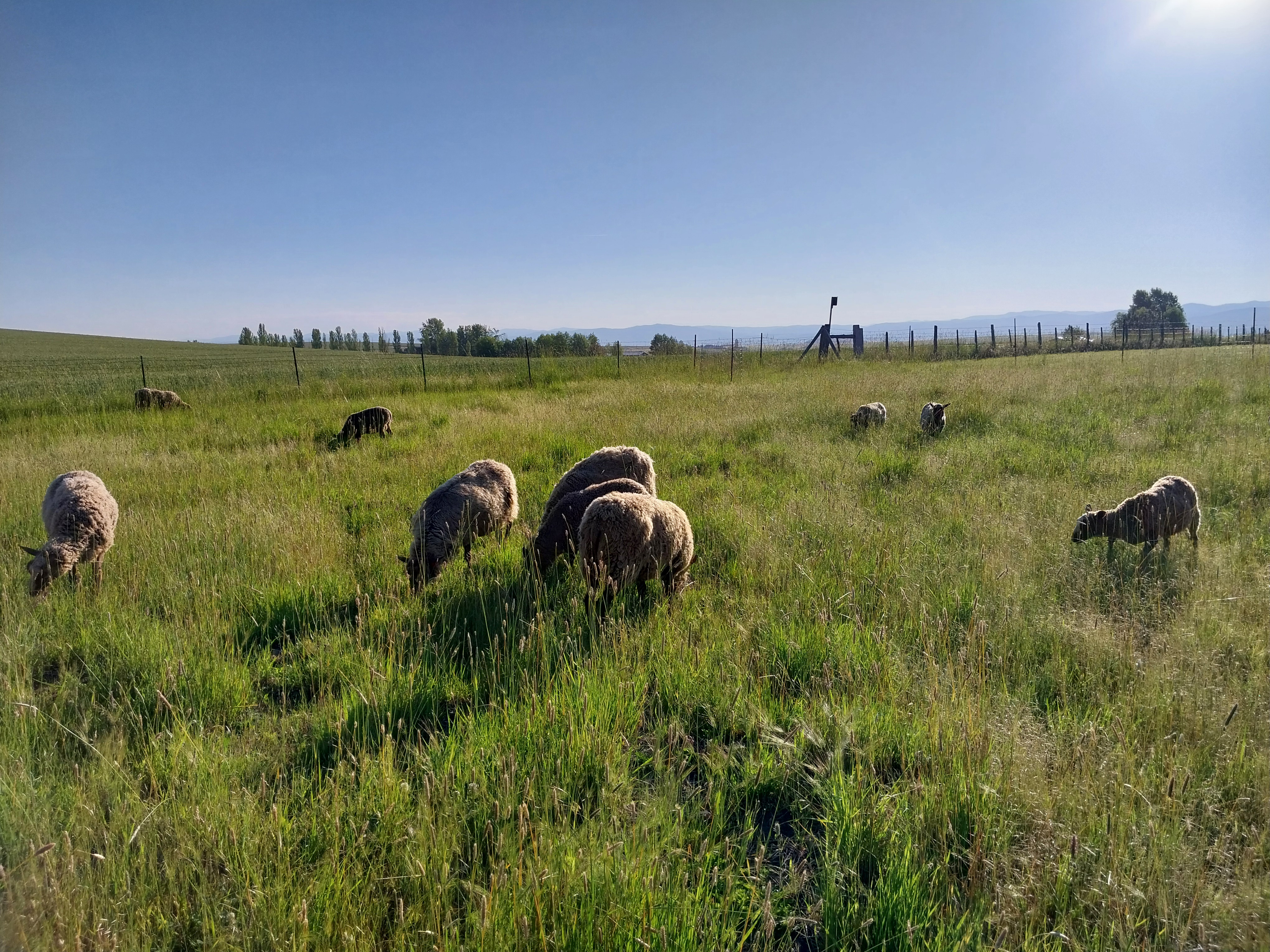
The key to regenerative management is movement. Just as in nature, herds of ruminants graze and move on, so too here at the ranch. Electric fence helps us subdivide our paddocks. Subdivision size, time to remain in each…highly variable. Its pasture dependent. How much regrowth? How much species diversity? Which species? What do we want grazed down hard? What demands a lighter touch? How much recovery time does this patch need? Do we want this paddock to reseed? Do we want to delay seed-set in exchange for more vegetative growth? Grazer numbers…weather conditions… Grazing is an art and a science.
We’re not going to pretend we have it figured out. Every paddock responds differently…every time. But we’re improving. And we’re really on to something. Between grazing disturbance, periodic seeding (broadcast), and varying early winter feed locations, the health and endurance of the pastures is much improved.
Learning management-intensive grazing is challenging, fun, and immensely rewarding. Do some research. Give it a try!
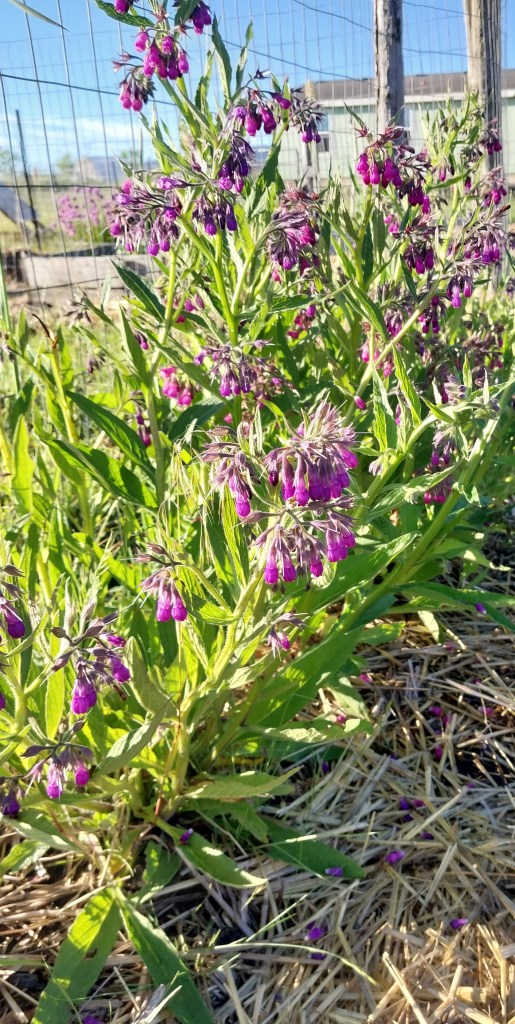
A friend told us that if one managed to grow ‘true comfrey’ from seed, then one would know: “We have arrived.” Where we had arrived wasn’t specified…presumably some gardening nirvana of some sort.
It took us a season or two… and a comical mix-up in seed packets that saw us nurturing ‘comfrey’ starts from seedling to unnaturally tall, yellow flowering…canola. Once the canola’s true identity was undeniable and established, we came to terms with its presence. It did alright, until serving as a sacrifice to the flea beetle hordes that seem to invariably seek our ranch when neighboring farmers spray or harvest their canola.
These days, our ‘true comfrey’ is doing alright as well. Second time’s the charm!
We’re looking forward to much more comfrey. Since comfrey is a bioaccumulator, we hope it collects any goodness attempting to escape from our garden. Then, we hope it re-gifts said goodness to the garden when compost teas are brewed from its leaves. A striking structural plant, it provides habitat for generalist beneficials. Its pretty flowers gladden the heart and provide food for native pollinators.
In the midst of our comfrey drama, the Latin name for comfrey “symphytum officinale” struck a chord. We’d heard legendary British gardener Monty Don observe with amusement that the ‘officinalis’ in so many botanical designations essentially means “common”. A further cursory search revealed that the such designations date back to medieval Europe and its monastic heritage. To be “officinalis” was to be kept in an “officina”, the monastic trove of medicines and culinary supply. “Officinalis” is related to another Latin word: “Officium” i.e. service, official duty, function, work-doing.
Ironic. The Romans, masters of “imperium” and “res publica”( i.e. the public thing) saw the ‘official’ as the common, work-doing thing. The implication? Political office is a means to preserve the commons, build the common good, serve the community held in common. If only our politicians grew comfrey…they might learn a thing or two!
















 Castricum Ranch