Early Seeding

Starting seedlings early always feels a bit rebellious. In our case, we snatch at the slightly less marginal weather of an early March day, open up the worm bin, and have at it.

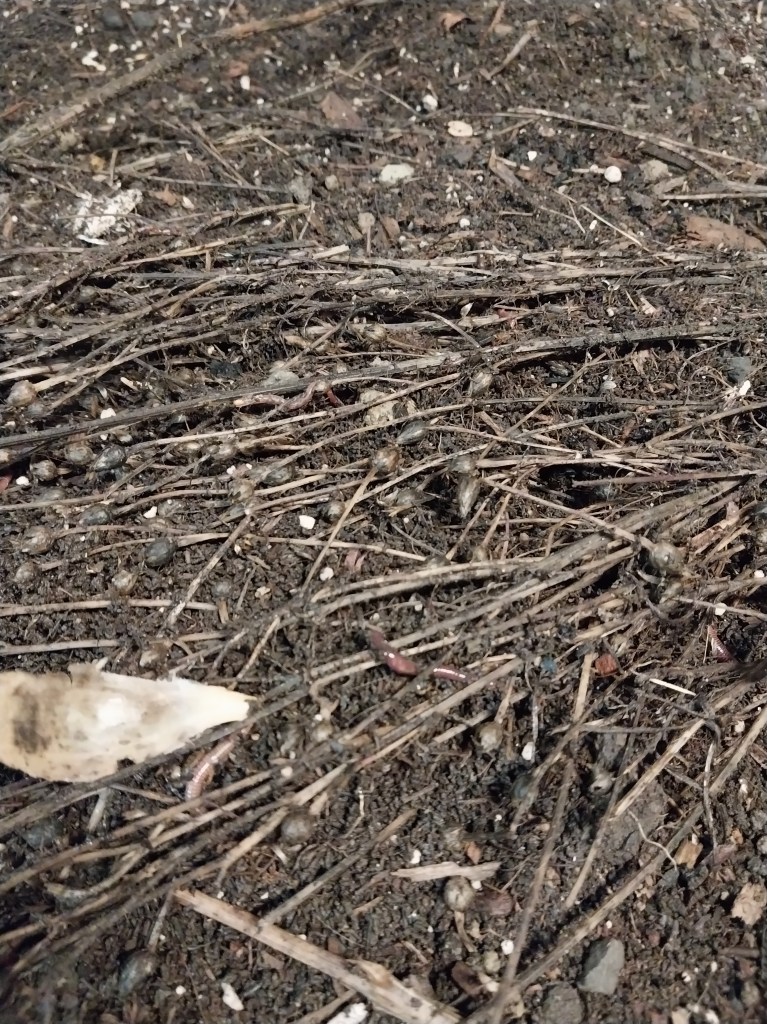
While the ‘standard’ recommendation is to use sterile media for seedling trays, we are experimenting with a different approach. Our initial media in the vermicompost bin was peat moss and newspaper (the latter long since transformed to dirt). Since then, our Red Wrigglers (Eisenia fetida) and European Night Crawlers (Lumbricus terrestris) have been working the same transformation on our kitchen scraps and left-overs, recharging depleted potting soil, and generally living a happy, wormy sort of life. What’s digested comes out the other end as a nutrient dense, fine, loam-like substance: worm-cast. Perhaps even more crucially than nutrients, the castings are teeming with microbiology. The microbes serve not only as a defense for seed and seedling, but also, from the earliest moment, enter into beneficial association with them, feed them, preventing disease and pest alike while strengthening all for the rigors of garden life.

Long story short…no sterile media here! That said, its important to steer clear of the undigested/active sections of the bin. The worms must be left to work their magic first, before their trove can be pillaged!

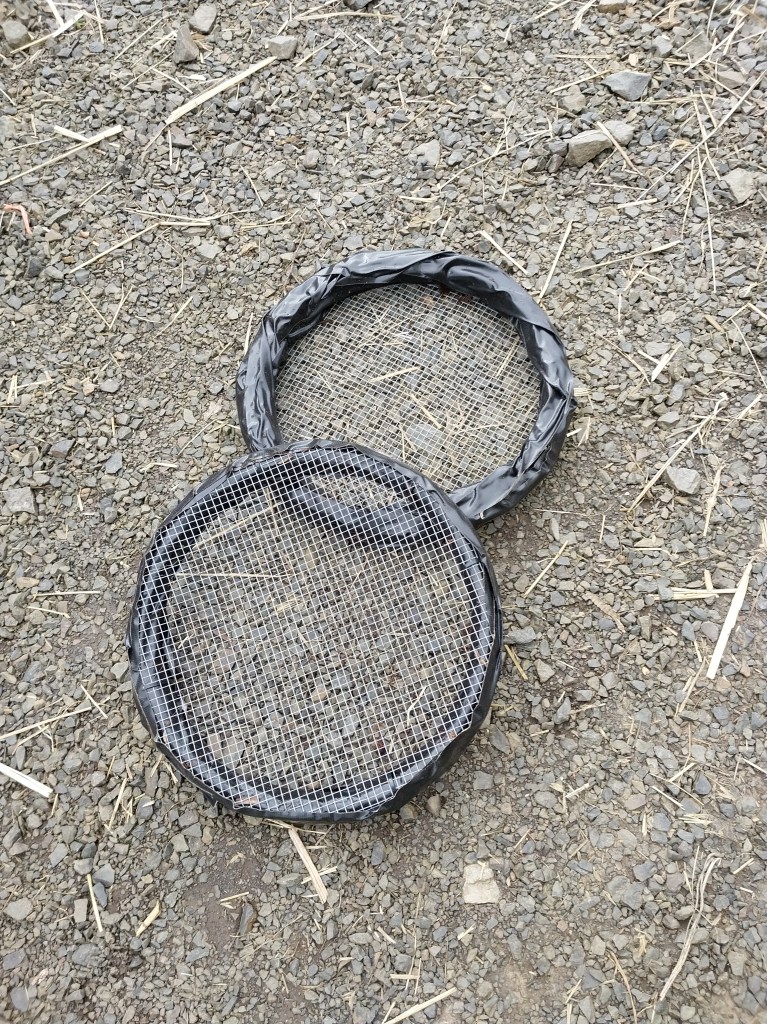
Sifters were called for; both to filter stray worms and to size the soil for optimal seed-to-soil-contact. Here are our upcycled sifters. Our son Liam gets the credit here. We saw hardware cloth and broken 5-gallon bucket lid rims…He saw sifters!

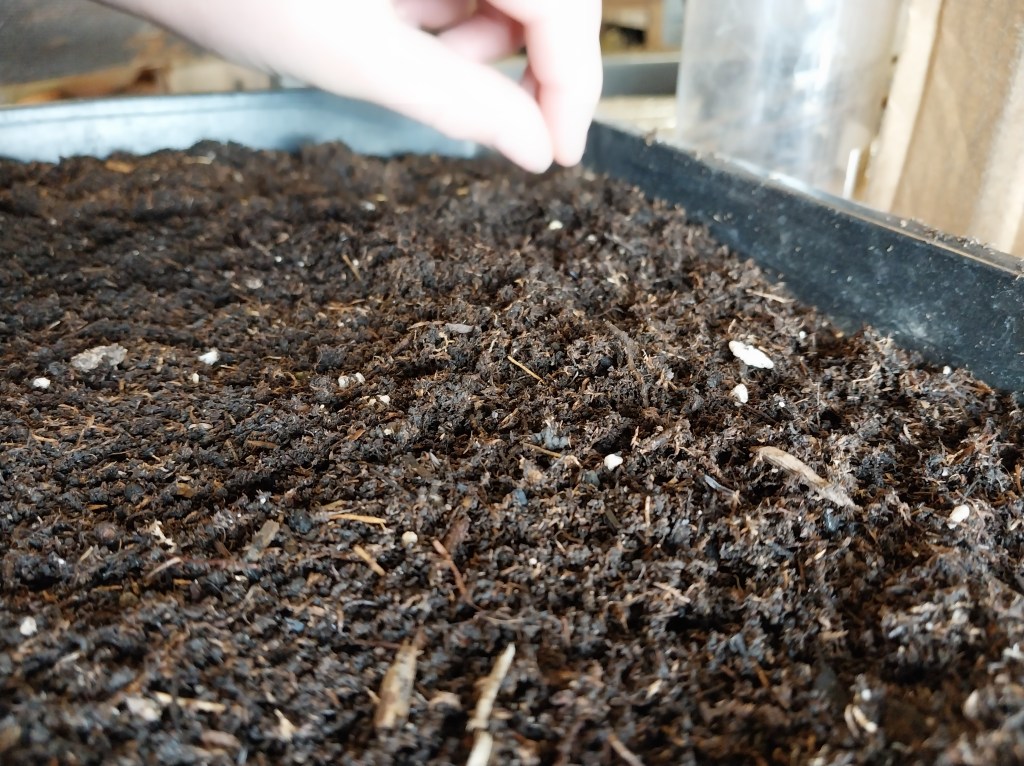
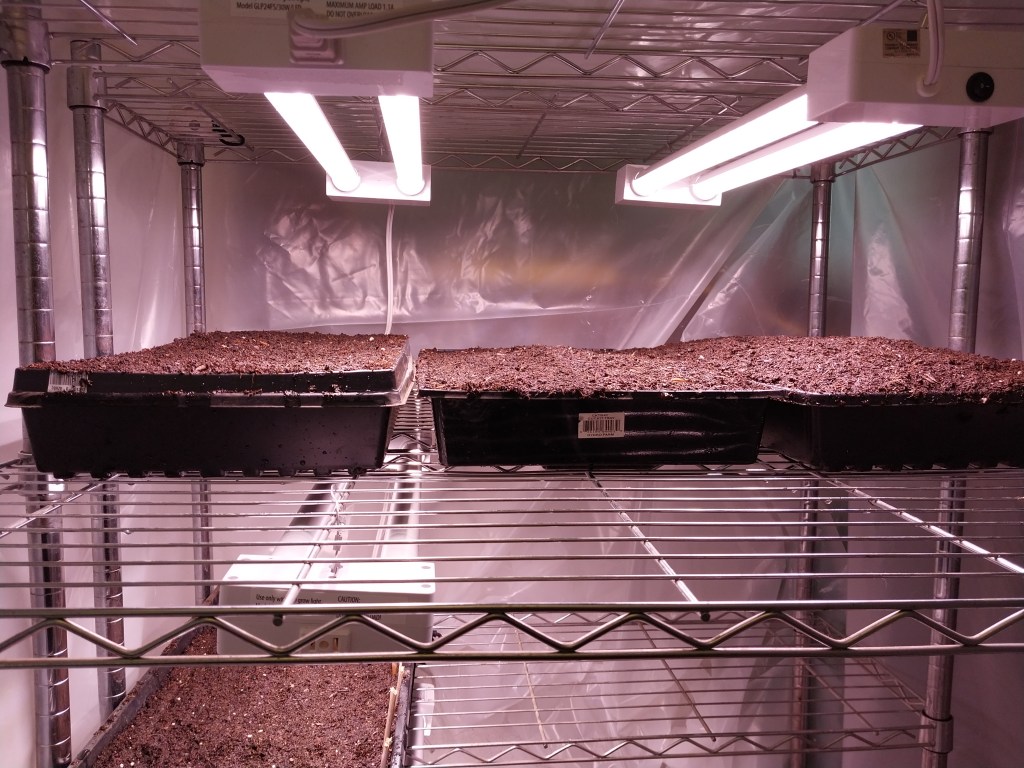
Seeds sown…

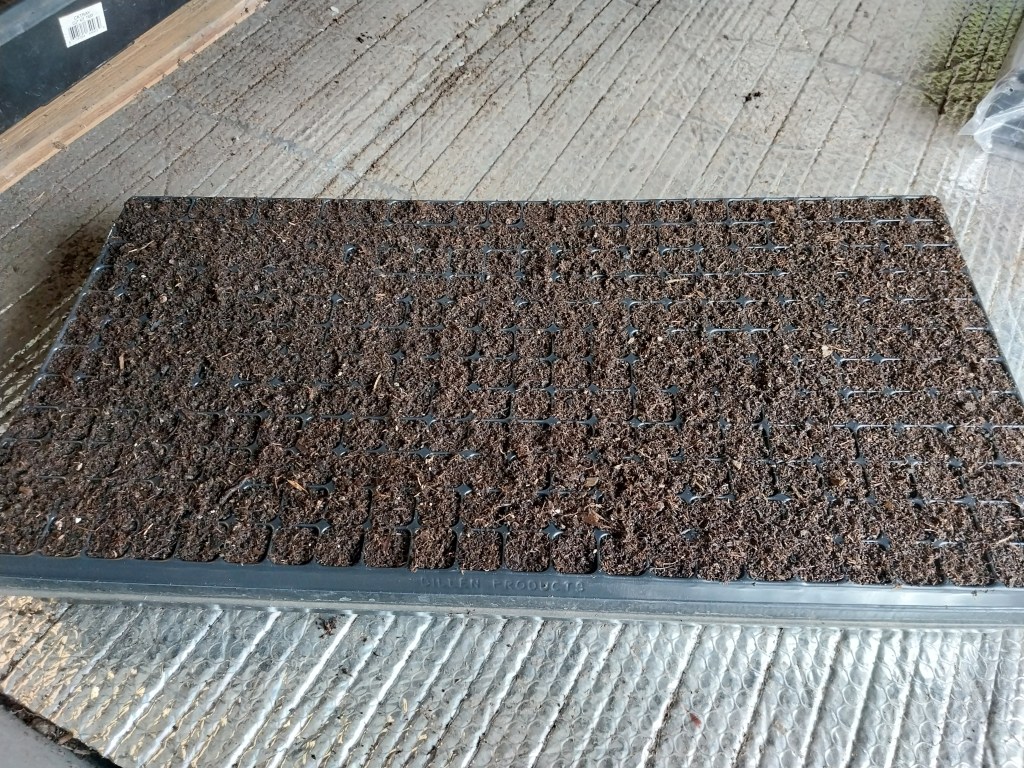
Into the germination and propagation chamber…

The results, a few weeks later…

Happy early seeding!

Family

‘Family’ is kind of a big deal around here. Safe to say, its a central theme. In the ‘family farmstead’ moniker, family might as well be in caps! Why the emphasis? Are we serious? Or is this another of those omnipresent ‘virtue-signals’…letting everyone know, without actual knowledge or deed?

Let’s address each question in reverse. Are we virtue signaling, broadcasting without actually living?

Well, we hope not. We believe that good things should start as things learned, lived, and shared among family…even before sharing with friends and neighbors. To our mind, this approach serves as a sort of integrity insurance. If a thing is worth doing, it is worth doing as a family. One should develop and share one’s talents with family…then the wider community. Thus, quality is assured, ensuring that one is not simply playacting or self-serving. Nothing keeps one so down to earth as the daily humblings, the moment-to-moment stresses and frustrations inevitably accompanying the joys of family life.

Are we serious about ‘family’? Very. Family holds the key by which we unlock meaning and purpose. As John Paul II observed, “God created man in His own image and likeness: calling him to existence through love, He called him at the same time for love.” Love is not an exercise in self-fulfillment. Love is a gift of self, an offering of oneself to other for other’s sake. The good Lord didn’t make humans for His sake…but for our own sakes. We, ourselves, are meant to imitate the same. Doing so, we receive the joy of fulfillment. JPII continues: “God inscribed in the humanity of man and woman the vocation, and thus the capacity and responsibility, of love and communion.” Human nature is real. Male and female are real. Our calling, our mission and purpose in life, can be understood through acceptance of our embodied reality. Not only is each of us capable of self-gift….each of us has a responsibility to it. Love and intimate communion is our ultimate fulfillment. Family results…fulfillment follows fulfillment.

All well and good, but why emphasize ‘family’ in one’s public efforts? Because the family farmstead is a school of sorts, an extension of the school that is family. We recognize with JPII that “the family has vital and organic links with society, since it [family] is its [society’s] foundation and nourishes it continually through its role of service.” As hidden as one’s efforts might be, as stumbling an attempt though they be, so long as one does the best one can, one builds-up the common good.

So yes, family is a big deal around here. From our family to yours, cheers!

Quo vadis?

Who am I? Where have I come from? Where am I going? Whom do I serve? Who will I become? What must I do? What is ‘the good life’? Can I live it? Is family ‘worth it’?

Medal of Honor recipient John Chapman was the best of the best. A Combat Controller (CCT), he had undergone one of the most grueling training regimens on earth. Now he was a minted member of the most accomplished, deadliest branch of U.S. Special Forces. Chapman’s story, told in Alone at Dawn, seems to culminate on the battlefields of Afganistan, as he heroically lay down his life to protect his brother soldiers. Yet, according to the man himself, his story had culminated long before he had ever been in combat.

Several weeks prior to his final deployment, Chapman had a conversation with a fellow CCT. He talked about how he and his wife, Valerie, were raising their two young children, “on a quiet cul-de-sac, sitting with other parents, watching their children play. He spoke of how he and Val approached raising the girls as a team,” contrasting his own “approach with that of many other[s]… who viewed family as something that came second to missions or career, and how it wasn’t until…[his daughters] were born that he recognized the error of that approach. ‘My job now is to serve my country, but there’s a greater thing than that. When this war is over, I’m going to dedicate myself to my family,’ John declared.”

Struck by the profundity of Chapman’s thoughts, his comrade later noted how “intensely personal” the former’s commitment to family was. “It was clear that he and Val loved each other deeply” and worked as authentic partners. Taken at face value, Chapman’s stance seemed to de-value everything a CCT endures and achieves to deserve the appellation. His fellow serviceman, however, assessed those statements with measured intuition: “What really stood out was his humanity and the way he approached family.”

For we civilians, living our ordinary daily lives, it is all too easy to lose sight of the importance of that ‘ordinary’. Some forgetfulness comes from distractions we insist on making part of life: phone, social media, drive, phone…repeat. Some forgetfulness is probably inevitable, due to the necessities of life. But the truly ordinary, true living is family life. The changing of diapers, the potty training, the educating, the disciplining…Responsibilities are the stuff of ordinary life. So are joys: welcoming new life into the world; playing ball with the kids; gardening with them in the spring; delighting in the family’s delight; tending to the family’s tears; sitting, as Chapman and his beloved did, with other parents; visiting and sharing the growth of one’s family. These are all so very ordinary…yet so important…in fact, the most important.

Without family life, culture, that shaper and product of human flourishing, crumbles. Without family life, countries fall and civilizations collapse. Family life such as Chapman lived, the culmination of the love between husband and wife, is the one thing that makes good sense in this increasingly topsy-turvy world. Our current culture is deeply troubled. A poisonous political atmosphere is characterized by increasingly noisy partisan belligerence, much of it camouflaging unified, cynical manipulation and self-serving. American cities and neighborhoods are losing/destroying social cohesion at an astounding rate. Rates of despair, mental disturbance, and dependency among the youth have never been higher. Don’t like it? Change it!

Easier said than done…but doable all the same. “Cultural change…demands from every one the courage to adopt a new lifestyle…the primacy of being over having, of person over things,” notes John Paul II. As yet, we are still free to choose the ordinary, the little, the hidden, knowing that that is the sole way to meaningfully change course, and serve the common good. If you wish the good, seek the truth, love the beautiful, honor the sacrifice of John Chapman and those like him…then live the ordinary, live family life to the full. “If you want to bring happiness to the whole world, go home and love your family.” Amen, Mother Teresa. Amen.